
The perfect package

Modified atmosphere packaging (MAP) in the food processing industry has facilitated major shifts in the consumer experience, says David Bell.
In the last decade the human life style has changed in a variety of ways, as have our expectations. Food is not only a basic need but now also a measure of living standards: consumers today expect certain criteria to be met, including unadulterated taste, longer shelf life and attractive appearance of packed perishable goods. Therefore the food industry has developed new food packaging techniques over the years to satisfy customer demands. MAP has risen to the challenge by offering improved quality to perishable food customers, and has grown to be a reliable technique.
Why MAP?
The door for MAP was opened, in principle, by the needs of the customer. People want fresh, attractive and high quality food at any time and location. To fulfill these expectations the manufacturer or trader has to solve significant logistic problems. Transport over long distances assumes high stability of the goods. In addition the packed food has to look attractive enough to be bought.
Consistent quality (taste, freshness, etc.) is absolutely necessary for strong customer loyalty. The original freshness and durability of perishable goods such as fresh meat, fish and seafood depend not only on the raw materials used but are also influenced by the environment. Microbiological organisms and biochemical reactions cause perishable food to spoil, particularly where fresh red meat or seafood is concerned. The spoilage begins right after slaughter and it is very hard to prevent because the organisms responsible are already present in the food. It is possible to reduce or decelerate their activities. A well-known and proven measure is to keep these foods cold. Certainly deep-frozen foods are not regarded as fresh products. In addition the goods have to be chilled constantly during transport, which is an added complication compared with MAP.

Micro-leak detection system for packages based on CO2. LEAK-MASTER features non-destructive detection of the smallest leaks without the need for costly Helium.
As with any consumer-based product, there has been a growing demand for the food industry to meet strict, effective, and consistent food safety standards. Current food technologies and the globalization of food production now involve a longer, more complex food chain with increased risks that include increased food-related illness and costly recalls. Having a standardized system for ensuring the integrity and safety of each link in the food chain became critical for suppliers to ensure consumer protection.
A basic understanding of the MAP process, the gases used and the equipment required to monitor the process is important to the gas supplier. The common gases used in MAP are carbon dioxide (CO2), nitrogen (N2) and oxygen (O2). These gases may be used as a stand-alone product, or in two or three gas mixtures. Other gases that may be used include argon (Ar), helium (He) and carbon monoxide (CO). These gases are usually blended in small amounts with other gases to produce a desired effect.
Carbon dioxide inhibits the increase of most aerobic bacteria and mildew. Without any doubt, CO2 is the most important gas in modified atmosphere food packaging applications. In general the higher the CO2 concentration, the longer the perishable food will last. However fat and water absorb CO2 gases very easily and excess CO2 concentrations cause quality failures regarding taste, loss of humidity and the concentration of the packaging (the so called vacuum effect). So suppliers must carefully consider how long the product has to be durable, and how acceptable reductions caused by CO2 are. If CO2 is intended to regulate the growth of bacteria and mildew, a concentration of at least 20 percent is recommended.
Nitrogen is an inert gas that is used to expel air, especially oxygen out of the packaging. It is also used as a filling gas that equalizes the effect of CO2 absorption by the perishable food. Nitrogen reduces the vacuum effect and is also a natural component of air.
Oxygen is an essential gas for the respiration of all living beings and supports the decay of perishable food. Aerobic micro-organisms need it to grow. In some cases, a specific amount of oxygen yields positive results:
• It keeps the natural color of the perishable food (effect of freshness).
• It makes possible respiration, especially for fruits or vegetables.
• It inhibits the growth of anaerobic micro organisms in several kinds of fish and vegetables.

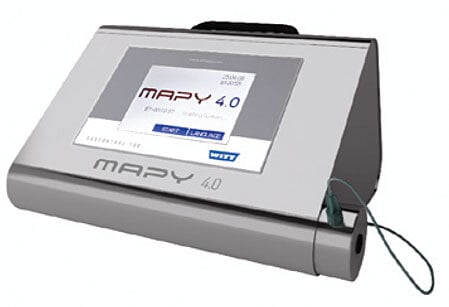
Cordless hand held oxygen or combined oxygen and carbon dioxide analyzer for checking modified atmospheres in food packs. The ideal instrument for portable, faster and accurate sample tests at the packaging machine, in stores or in laboratories.
Hazard analysis and critical control points
Hazard analysis and critical control points or HACCP is a systematic preventive approach to food safety that addresses any physical, chemical, and biological hazards as a means of prevention rather than finished product inspection.
HACCP is the food industry standard used to identify potential food safety hazards, so that key actions can be taken to reduce or eliminate the risk of the hazards being realized. The system is used at all stages of food production and preparation processes including packaging, distribution, etc. Meat HACCP systems are regulated by the United States Department of Agriculture (USDA), while seafood and juice are regulated by the Food and Drug Administration (FDA). The use of HACCP is currently voluntary in other food industries. As more food products are processed with the use of MAP, HACCP will eventually be incorporated in existing FDA or USDA guidelines.
HACCP
The seven HACCP principles are included in the international standard ISO 22000 FSMS 2005. This standard is a complete food safety and quality management system incorporating the elements of prerequisite programs (GMP & SSOP), HACCP and the quality management system, which together form an organization’s Total Quality Management system.
It can apply to several food categories; sea food, bulk milk production line, bulk cream and butter production line, animal meat industry, organic chemical contaminants in food, corn curl manufacturing plant, etc.
Implementation involves monitoring, verifying and validating that daily work is compliant with regulatory requirements.
HACCP: seven principles
• Conduct a hazard analysis
• Identify critical control points
• Establish critical limits for each critical control point
• Establish critical control point monitoring requirements
• Establish corrective actions
• Establish procedures for ensuring the HACCP system is working as intended
• Establish record keeping procedures
For full details visit: www.fda.gov/Food/FoodSafety/


Have your say
You must sign in to make a comment